Understanding the Cambodia Flag: A National Symbol
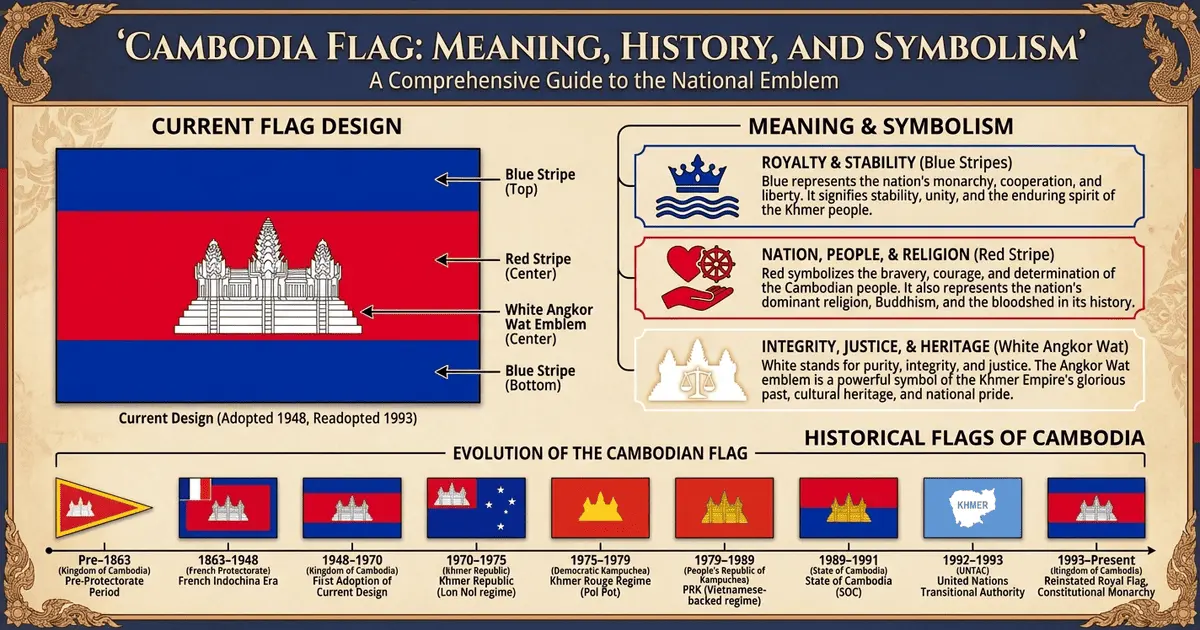
The Cambodia flag is a vibrant representation of the nation’s identity and heritage. It features three horizontal stripes: blue at the top and bottom, with a wider red stripe in the center. The iconic Angkor Wat temple is depicted in white at the center of the red band, symbolizing national pride and cultural heritage. The official proportions of the flag are 2:3, with the blue and red colors representing royalty and bravery, respectively.
The Meaning Behind the Colors and Symbols
The colors of the Cambodia flag carry profound meanings:
- blue: Represents royalty and the monarchy, reflecting the historical significance of the Cambodian kings.
- Red: Symbolizes bravery and the bloodshed by Cambodians in their struggle for independence and national unity.
- White: Stands for purity and the Buddhist faith, which is central to Cambodian culture.
The Angkor Wat temple, featured prominently on the flag, is not just a historical site but a symbol of national pride and the enduring spirit of the Khmer people. It represents the rich cultural heritage and the Buddhist values that are integral to Cambodian identity.
A Brief History of the Cambodia Flag
The current design of the Cambodia flag was officially adopted on June 24, 1993, after the restoration of the monarchy. However, the flag has undergone several changes throughout history:
- French Protectorate (1863-1953): The flag featured a blue field with a white circle and a red border.
- Khmer Republic (1970-1975): A flag with a blue field and a yellow Angkor Wat.
- Democratic Kampuchea (1975-1979): A plain red flag symbolizing the Khmer Rouge regime.
- People's Republic of Kampuchea (1979-1989): A flag with a red field and a yellow Angkor Wat.
- State of Cambodia (1989-1993): A return to a design similar to the current flag, leading to the present version.
Proper Usage and Protocol of the Cambodia Flag
In Cambodia, the national flag is displayed with great respect. It is commonly seen at government buildings, schools, and during national holidays and ceremonies. Here are some dos and don'ts for displaying the flag:
- Do: Display the flag prominently during national celebrations and events.
- Don't: Allow the flag to touch the ground or be used for commercial purposes.
Cultural Significance of the Cambodia Flag Today
For many Cambodians, the flag is a powerful symbol of identity and unity, especially in the post-conflict era. It represents resilience and hope for a brighter future. The flag is often used in educational settings to instill a sense of national pride among the youth. It serves as a reminder of the sacrifices made for freedom and the importance of preserving Cambodia's rich cultural heritage.
Conclusion
The Cambodia flag is more than just a piece of fabric; it embodies the spirit, history, and aspirations of the Cambodian people. Understanding its meaning and significance can deepen one’s appreciation for this beautiful country. For those planning to visit, consider exploring the Best Time to Visit Cambodia to experience its rich culture firsthand.
FAQ
What do the colors of the Cambodia flag represent?
The blue represents royalty, red symbolizes bravery, and white stands for purity and Buddhism.
Why is Angkor Wat on the Cambodia flag?
Angkor Wat is a symbol of national pride and cultural heritage, representing the historical significance of the Khmer Empire.
When was the current Cambodia flag adopted?
The current design was adopted on June 24, 1993, after the restoration of the monarchy.
How is the Cambodia flag used during national holidays?
The flag is prominently displayed at government buildings and during ceremonies to honor national pride.
What are the common mistakes in displaying the Cambodia flag?
Common mistakes include allowing the flag to touch the ground or using it for commercial purposes.
How do Cambodians view their national flag today?
The flag is seen as a symbol of identity, unity, and resilience, especially in the context of post-conflict recovery.
Can I find more guides about Cambodia?
Yes, you can Explore more guides → for insights into Cambodian culture and travel tips.